
Experience the 1800s at the Henry B. Plant Museum
- alexa estevez
- Apr 12, 2024
- 3 min read

Where there is depth, there is a story and in history museums, there are both.
When it comes to museums, I gravitate towards historical ones. Yes, the art museums are beautiful to admire, but if there is not a description of the art work, I say, “Wow” and move on. I personally like reading content about how something began, and in history museums I find that option more.
On that note, I recently went to the Henry B. Plant Museum in Tampa, Florida. The hours of operation for the museum are Monday through Saturday, 10 a.m. to 5 p.m., and Sundays 12 p.m. to 5 p.m. It costs, $10 to enter, but on the second Saturday of every month, entry is free.
I took advantage of the free Saturday option.
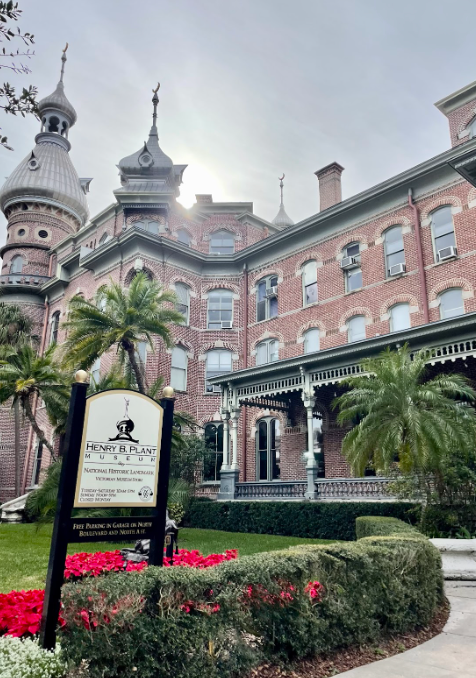
Before I walked into the museum, I was captivated by the structure of the building. The roof consisted of minarets, finials and domes, which gave the building a mosque appearance.

The Henry B. Plant Museum was formerly known as the Tampa Bay Hotel. It was a railroad resort built in the late 1800s by Plant himself and operated until the mid-1900s. Before Plant constructed this hotel, he began his career as a captain’s boy for the New Haven Steamboat Company where he worked for the boat’s express shipping business. Overtime, he became proficient in his job and got hired at the Adams Express Company in New York. As Plant oversaw the express transportation at Adams Express, the Civil War continued and he took a leave of absence to explore the Caribbean, Europe and Canada.
After his travels, he returned back to Adam’s Express and after a few years passed, Plant gathered investors and bought the company. This purchase led him to start the Plant System of railroads, which would connect railroads from South Carolina, Georgia, Florida and Alabama. Plant’s railroad connection to Florida brought the state a lot of tourists; a reason why he built this hotel. In addition to the railroad bringing in tourists from colder climates, Plant started steamship lines for travelers to explore Florida more efficiently.

On display in each of the rooms were articles of clothing, furniture and other decor items from those periods. My favorite room was the Garden and Garden Furnishings Room. This room was filled with antique, ceramic stools and flower pots that Plant collected on his European trips. Most of the stools in the garden room were designed like different animals. If I had a house with a garden, I would have the frog stool because it perfectly fits a garden aesthetic and to me, little frogs are adorable.

A room that caught me off guard, was the bathroom. Its tub, toilet and sink were so tiny and quaint; I couldn’t imagine a tall person using this bathroom. Despite its small structured bathroom fixtures, I did like the floors, which were black and white hexagons.

As I walked around one of the rooms, I began to hear classical music and I followed its sound. I ended up in the lobby where I saw the man who was playing classical music on his guitar. As the music played, I felt like I was living in the 1800s when the hotel was in operation.
While I thought the museum took up the whole building, it only took up a quarter of it. The rest of the building had been transformed into classrooms for the University of South Florida (USF) students. As I walked around the classroom quarters, there was one last room filled with historical significance I wanted to see, the ballroom. It was a large, open-floored circular room with a dome ceiling and a rotunda. I couldn’t access the rotunda, but it was amazing to witness from afar. With its red drapes and decorative, wooden paneling, it was the last step back into the late 1800s I needed to encounter before re-entering the 2000s.


Comments